
Primary Antibody Matched Pairs


Biotium S100A9(47-8D3), 0.2mg/mL
This MAb stains the cytoplasm of macrophages and histiocytes in hematopoietic organs, Kupffer's cells of the liver and Langerhan's cells of the skin. It also stains the mantle zone B-lymphocytes of the lymph node and spleen, spermatogonia, and chief cells of the stomach. S100A9 is expressed by macrophages in acutely inflamed tissues and in chronic inflammation. It is detected in peripheral blood leukocytes, in neutrophils and granulocytes. It is present at sites of vascular inflammation. S100A9 is also expressed in epithelial cells constitutively or induced during dermatoses. S100A9 is a Calcium-binding protein. It has antimicrobial activity towards bacteria and fungi. It is important for resistance to invasion by pathogenic bacteria. It up-regulates transcription of genes that are under the control of NF-kappa-B. S100A9 plays a role in the development of endotoxic shock in response to bacterial lipopolysaccharide (LPS). It promotes tubulin polymerization when unphosphorylate

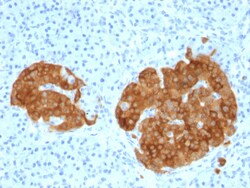
Biotium GAD2 / GAD65 (GABAergic Neuronal Marker) (GAD2/1960), Biotin conjugate, 0.1mg/mL
This MAb recognizes a protein of 65 kDa, which is identified as glutamic acid decarboxylase 2 (GDA2). It is responsible for catalyzing the production of gamma-aminobutyric acid from L-glutamic acid. There are two forms of glutamic acid decarboxylases (GAD s) that are found in the brain: GAD2 (also known as GAD65) and GAD1 (also known as GAD67). GAD1 and GAD2 are members of the group II decarboxylase family of proteins and are responsible for catalyzing the rate-limiting step in the production of GABA (ÃŽ³-aminobutyric acid) from L-glutamic acid. Although both GAD s are found in the brain, GAD2 localizes to synaptic vesicle membranes in nerve terminals, while GAD1 is distributed throughout the cell. A pathogenic role for GAD2 is identified in the human pancreas since it has been identified as an autoantibody and an auto-reactive T cell target in insulin-dependent diabetes.Primary antibodies are available purified, or with a selection of fluorescent CF Dyes and other label
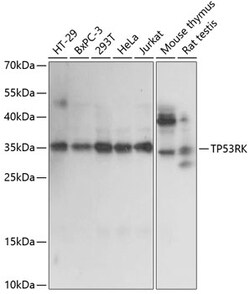
ABclonal Technology TP53RK Rabbit pAb

Enables p53 binding activity and protein serine/threonine kinase activity. Involved in protein phosphorylation. Located in cytoplasm and nucleus. Part of EKC/KEOPS complex. Implicated in Galloway-Mowat syndrome 4.
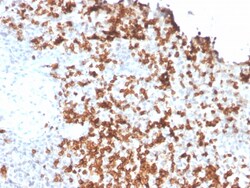
Biotium Granzyme B (NK/T-Cell Lymphoma Marker)(GZMB/3056), CF594 conjugate, 0.1mg/mL
Granzyme B is a member of the granule serine protease family stored specifically in NK cells or cytotoxic T cells. Cytolytic T lymphocytes (CTL) and natural killer (NK) cells share the ability to recognize, bind, and lyse specific target cells. They are thought to protect their host by lysing cells bearing on their surface 'nonself' antigens, usually peptides or proteins resulting from infection by intracellular pathogens. Granzyme B is crucial for the rapid induction of target cell apoptosis by CTLs in the cell-mediated immune response. Granzyme B is useful as a marker in the identification of NK/T-cell lymphomas. High percentages of cytotoxic T-cells have been shown to be an unfavorable prognostic indicator in Hodgkin's Disease. Primary antibodies are available purified, or with a selection of fluorescent CF Dyes and other labels. CF Dyes offer exceptional brightness and photostability. Note: Conjugates of blue fluorescent dyes like CF405S and CF405M are not recommende
![ABclonal Technology [KO Validated] ANXA1 Rabbit pAb](https://assets.fishersci.com/TFS-Assets/CCG/product-images/5000115166.jpg-250.jpg)
ABclonal Technology [KO Validated] ANXA1 Rabbit pAb
This gene encodes a membrane-localized protein that binds phospholipids. This protein inhibits phospholipase A2 and has anti-inflammatory activity. Loss of function or expression of this gene has been detected in multiple tumors.
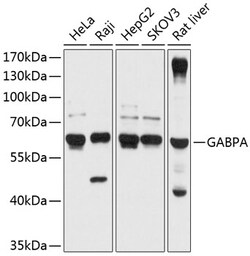
ABclonal Technology GABPA Rabbit pAb
This gene encodes one of three GA-binding protein transcription factor subunits which functions as a DNA-binding subunit. Since this subunit shares identity with a subunit encoding the nuclear respiratory factor 2 gene, it is likely involved in activation of cytochrome oxidase expression and nuclear control of mitochondrial function. This subunit also shares identity with a subunit constituting the transcription factor E4TF1, responsible for expression of the adenovirus E4 gene. Because of its chromosomal localization and ability to form heterodimers with other polypeptides, this gene may play a role in the Down Syndrome phenotype. Two transcript variants encoding the same protein have been found for this gene.
Biotium UGT1A9 (UDP glucuronosyltransferase 1 family, polypeptide A9)(UGT1A9/1229), 0.2mg/mL
This antibody recognizes a protein of about 60 kDa, which is identified as human UGT1A9. It does not cross-react with the other UGT1A isoforms including UGT1A7, UGT1A8, and UGT1A10 and shows a high degree of specificity. UGT1A9 is a UDP-glucuronosyltransferase, an enzyme of the glucuronidation pathway that transforms small lipophilic molecules, such as steroids, bilirubin, hormones, and drugs, into water-soluble, excretable metabolites. This MAb binds to human hepatocytes and the majority of human hepatocellular carcinomas (HCC s). In frozen sections, it stains hepatic cells and may be used as a marker of the liver. This MAb also binds to cell preparations of hepatocellular carcinoma biopsies or cell lines.Primary antibodies are available purified, or with a selection of fluorescent CF Dyes and other labels. CF Dyes offer exceptional brightness and photostability. Note: Conjugates of blue fluorescent dyes like CF405S and CF405M are not recommended for detecting low abund
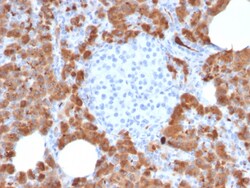
Biotium Carboxypeptidase A1 / CPA1 (Pancreatic Cancer Marker)(CPA1/2714), CF488A conjugate, 0.1mg/mL
Carboxypeptidase A1 (CPA1) is a secreted zinc metalloprotease that is highly expressed in pancreatic tissue. It catalyzes the release of C-terminal amino acids from a variety of proteins, thereby playing a key role in protein digestion and degradation. Human pancreatic procarboxypeptidase A exists as three different active forms, two of which are carboxypeptidase A1 (CPA1) and carboxypeptidase A2 (CPA2). Abnormal levels of CPA1 are associated with pancreatic cancer, suggesting a possible role in either tumor progression or tumor suppression events. Primary antibodies are available purified, or with a selection of fluorescent CF Dyes and other labels. CF Dyes offer exceptional brightness and photostability. Note: Conjugates of blue fluorescent dyes like CF405S and CF405M are not recommended for detecting low abundance targets, because blue dyes have lower fluorescence and can give higher non-specific background than other dye colors.
Biotium UGT1A9 (UDP glucuronosyltransferase 1 family, polypeptide A9)(UGT1A9/1229), CF740 conjugate, 0.1mg/mL
This antibody recognizes a protein of about 60 kDa, which is identified as human UGT1A9. It does not cross-react with the other UGT1A isoforms including UGT1A7, UGT1A8, and UGT1A10 and shows a high degree of specificity. UGT1A9 is a UDP-glucuronosyltransferase, an enzyme of the glucuronidation pathway that transforms small lipophilic molecules, such as steroids, bilirubin, hormones, and drugs, into water-soluble, excretable metabolites. This MAb binds to human hepatocytes and the majority of human hepatocellular carcinomas (HCC s). In frozen sections, it stains hepatic cells and may be used as a marker of the liver. This MAb also binds to cell preparations of hepatocellular carcinoma biopsies or cell lines.Primary antibodies are available purified, or with a selection of fluorescent CF Dyes and other labels. CF Dyes offer exceptional brightness and photostability. Note: Conjugates of blue fluorescent dyes like CF405S and CF405M are not recommended for detecting low abund
Biotium Carboxypeptidase A1 / CPA1 (Pancreatic Cancer Marker)(CPA1/2711), CF740 conjugate, 0.1mg/mL
Carboxypeptidase A1 (CPA1) is a secreted zinc metalloprotease that is highly expressed in pancreatic tissue. It catalyzes the release of C-terminal amino acids from a variety of proteins, thereby playing a key role in protein digestion and degradation. Human pancreatic procarboxypeptidase A exists as three different active forms, two of which are carboxypeptidase A1 (CPA1) and carboxypeptidase A2 (CPA2). Abnormal levels of CPA1 are associated with pancreatic cancer, suggesting a possible role in either tumor progression or tumor suppression events. Primary antibodies are available purified, or with a selection of fluorescent CF Dyes and other labels. CF Dyes offer exceptional brightness and photostability. Note: Conjugates of blue fluorescent dyes like CF405S and CF405M are not recommended for detecting low abundance targets, because blue dyes have lower fluorescence and can give higher non-specific background than other dye colors.
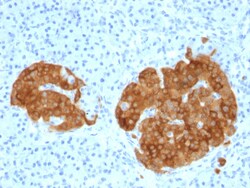
Biotium GAD2 / GAD65 (GABAergic Neuronal Marker) (GAD2/1960), CF647 conjugate, 0.1mg/mL
This MAb recognizes a protein of 65 kDa, which is identified as glutamic acid decarboxylase 2 (GDA2). It is responsible for catalyzing the production of gamma-aminobutyric acid from L-glutamic acid. There are two forms of glutamic acid decarboxylases (GAD s) that are found in the brain: GAD2 (also known as GAD65) and GAD1 (also known as GAD67). GAD1 and GAD2 are members of the group II decarboxylase family of proteins and are responsible for catalyzing the rate-limiting step in the production of GABA (ÃŽ³-aminobutyric acid) from L-glutamic acid. Although both GAD s are found in the brain, GAD2 localizes to synaptic vesicle membranes in nerve terminals, while GAD1 is distributed throughout the cell. A pathogenic role for GAD2 is identified in the human pancreas since it has been identified as an autoantibody and an auto-reactive T cell target in insulin-dependent diabetes.Primary antibodies are available purified, or with a selection of fluorescent CF Dyes and other label
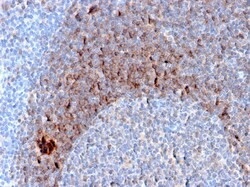
Biotium CD79b (B-Cell Marker)(B29/123), 1mg/mL
CD79 (also designated Ig chains, designated CD79B or B29. The B cell antigen receptor complex (BCR) is formed by the association of CD79 with a membrane immunoglobulin, such as IgM or IgD. The membrane immunoglobulins IgM and IgD achieve surface expression and antigen presentation function in response to CD79 association. The cytoplasmic tails of both CD79A and CD79B contain an ITAM (immuno-receptor tyrosine-based activation) motif, which acts to initiate the BCR signaling reactions by binding to and activating tyrosine kinases. Primary antibodies are available purified, or with a selection of fluorescent CF Dyes and other labels. CF Dyes offer exceptional brightness and photostability. Note: Conjugates of blue fluorescent dyes like CF405S and CF405M are not recommended for detecting low abundance targets, because blue dyes have lower fluorescence and can give higher non-specific background than other dye colors.
![ABclonal Technology [KO Validated] PDK1/PDPK1 Rabbit pAb](https://assets.fishersci.com/TFS-Assets/CCG/product-images/5000109506.jpg-250.jpg)
ABclonal Technology [KO Validated] PDK1/PDPK1 Rabbit pAb
Enables 3-phosphoinositide-dependent protein kinase activity, phospholipase activator activity, and phospholipase binding activity. Involved in several processes, including cell surface receptor signaling pathway, regulation of protein kinase activity, and regulation of signal transduction. Acts upstream of or within intracellular signal transduction. Located in cell projection, cytosol, and plasma membrane. Implicated in prostate cancer. Biomarker of lung non-small cell carcinoma.
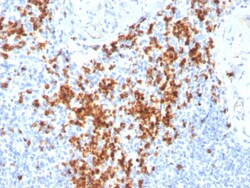
Biotium Granzyme B (NK/T-Cell Lymphoma Marker)(GZMB/3014), CF568 conjugate, 0.1mg/mL
Granzyme B is a member of the granule serine protease family stored specifically in NK cells or cytotoxic T cells. Cytolytic T lymphocytes (CTL) and natural killer (NK) cells share the ability to recognize, bind, and lyse specific target cells. They are thought to protect their host by lysing cells bearing on their surface 'nonself' antigens, usually peptides or proteins resulting from infection by intracellular pathogens. Granzyme B is crucial for the rapid induction of target cell apoptosis by CTLs in the cell-mediated immune response. Granzyme B is useful as a marker in the identification of NK/T-cell lymphomas. High percentages of cytotoxic T-cells have been shown to be an unfavorable prognostic indicator in Hodgkin's Disease. Primary antibodies are available purified, or with a selection of fluorescent CF Dyes and other labels. CF Dyes offer exceptional brightness and photostability. Note: Conjugates of blue fluorescent dyes like CF405S and CF405M are not recommende
AdipoGen Periostin (human) Matched Pair Detection Set (1 Set)
Matched Pair Detection Set. Detects human periostin. Colorimetric assay. Sample Type: Cell Culture Supernatant, Plasma, Serum. Range: 80 to 5000pg/ml. Sensitivity: 30pg/ml. Periostin is also involved in many fundamental biological processes such as cell proliferation, cell invasion and angiogenesis. Changes in periostin expression are commonly detected in various cancers and pre-cancerous conditions, and periostin may be involved in regulating cancer cell activities that contribute to tumorigenesis, cancer progression and metastasis. Periostin up-regulation in cancers usually correlates with aggressiveness and/or poor survival. Periostin has shown to be involved in many aspects of allergic inflammation, such as eosinophil recruitment, airway remodeling, development of a Th2 phenotype and increased expression of inflammatory mediators. It is evaluated as a biomarker for bronchial asthma and airway inflammation.